




















Stake Casino: Choose Games with the Rules in View
The hardest part of a large casino lobby is rarely finding a game. It is deciding what the next click commits you to. A slot, a live table and a fast original title can display the same stake amount while creating very different experiences. Use this Stake casino guide to understand those differences before judging the catalogue by its size.
Work through the categories that interest you, read the rules inside the exact title and compare the cost of a round. The international product descriptions below concern eligible accounts; our India access update explains the current regional context.
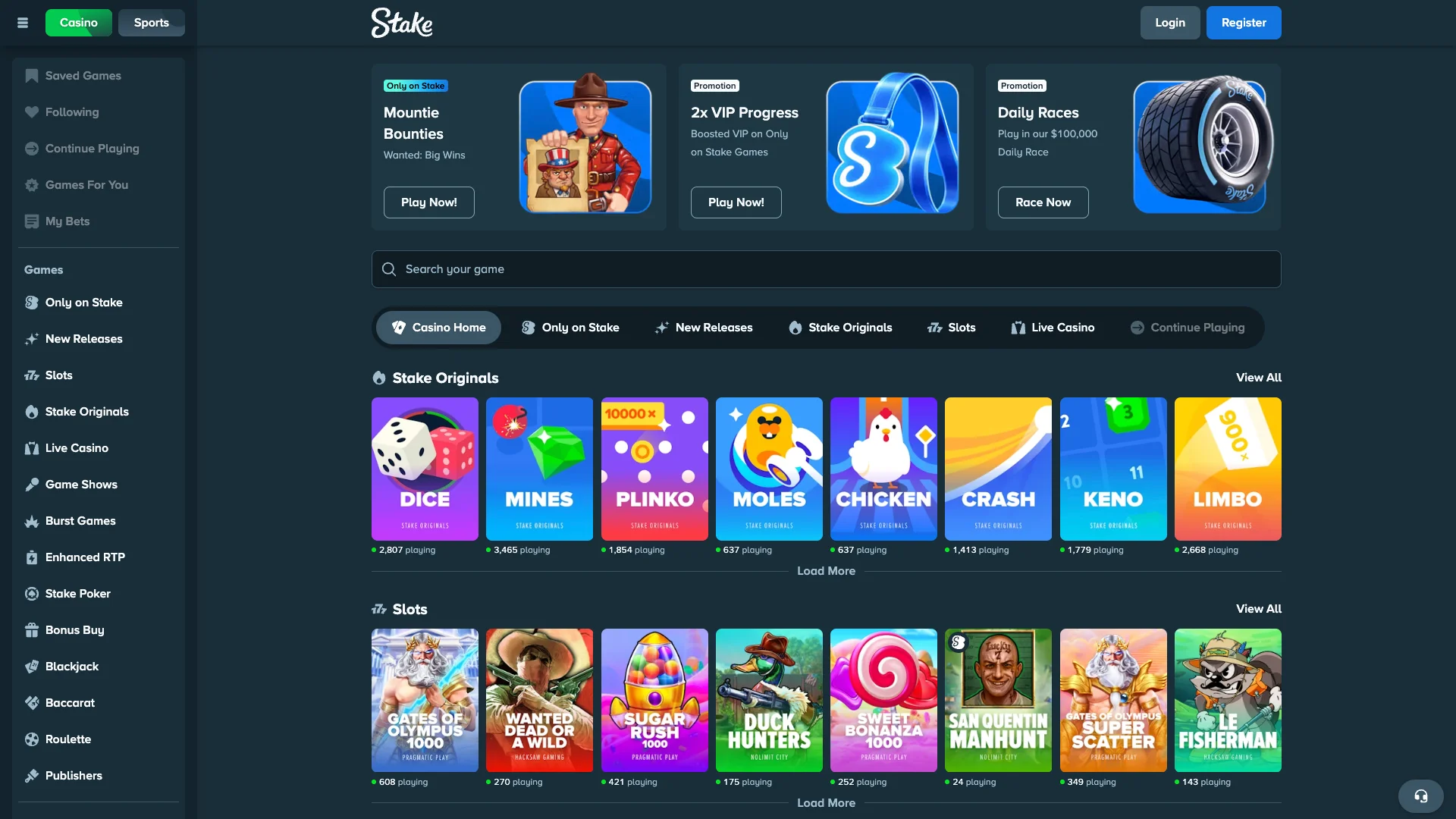
Make the lobby smaller before you explore it
Choose a category or provider first. That simple filter removes much of the visual noise and lets you compare games that share a useful characteristic. You might want short individual rounds, a dealer-led table or a slot with a specific feature.
A trending label tells you that a title attracts attention. It does not report the chance of a favourable result. Recent-winner panels have the same limitation: they highlight selected outcomes without showing the complete distribution of stakes and losses that surrounded them.
Use search for a precise title, including its version. Similar names can hide different rules, feature prices or payout settings. Once the game opens, inspect the information panel rather than importing assumptions from another casino or an older edition.
Availability can vary by account and jurisdiction. If a studio or title does not appear, check the platform's explanation. A logo in an old review cannot promise a current listing.
Slots: compare what one spin actually buys
Start with the total stake. Some games calculate it through coin values or line settings; others present a single amount. Optional features may increase that amount. Before activating a purchase, read the confirmation screen and translate the quoted multiplier into currency.
A fictional feature priced at 80 times a 0.50-unit base stake costs 40 units. It does not cost 0.50 units. Keep the cost visible when you compare an ordinary spin with a feature purchase.
| Detail | What to inspect | Why it changes your reading |
|---|---|---|
| Winning mechanism | Lines, ways, clusters or another arrangement | The same symbol layout can pay differently. |
| Feature entry | Natural trigger, optional purchase or enhanced stake | Your cost per round can change sharply. |
| RTP | The figure in the current game's help panel | A provider may distribute more than one configuration. |
| Volatility | The pattern of small returns and rarer large ones | Similar averages can produce very different sessions. |
| Maximum award | Its stake basis and any cash limit | A headline multiplier does not establish a likely return. |
Popular series such as Sweet Bonanza and Gates of Olympus help illustrate why version names matter. A familiar theme does not make a sequel identical to the original. Compare the actual rules and feature description each time you open a different release.
Read RTP without turning it into a session forecast
If a theoretical game returns 96% over its mathematical model, a fixed amount of turnover has a 4% expected loss under that model. Your next hundred spins can differ substantially. The figure describes the distribution; it does not assign you a personal refund.
Turnover also differs from your starting balance. Reusing returned funds creates more turnover without another deposit. That is why a modest balance can support many wagers while still facing the house edge repeatedly.
Follow the cost of a round from click to balance
The displayed bet is only the beginning of a cost comparison. A standard spin, an enhanced spin and a direct feature purchase can all appear in the same game window. Identify which control is active before interpreting the amount beside it. If a fictional game offers a feature for 80 times a 0.50-unit base stake, the purchase costs 40 units. It is not another 0.50-unit spin.
Now separate payout from profit. A 30-unit return on that 40-unit purchase is a 10-unit net loss. The game may use colours, sounds and a result panel that emphasise the return. The account balance records the financial effect. This is why a list of “winning rounds” can be misleading unless it includes the stake attached to each round.
Repeated ordinary play also accumulates. One hundred rounds at 0.50 units create 50 units of turnover, even when the same opening balance circulates through several small wins and losses. Turnover measures activity. It does not equal the amount deposited, the final loss or the amount that can be withdrawn.
For comparison, write down four numbers: the stake per round, planned maximum rounds, potential optional-feature cost and the amount you are prepared to lose. These are different quantities. A practical stopping boundary depends on available funds and personal decisions, while a game's RTP remains a property of its mathematical model.
Read a slot information panel without getting lost
Begin with the symbols and the win mechanism. A payline game evaluates combinations on defined lines. A ways game evaluates qualifying symbols across reels according to its rules. A cluster game evaluates connected groups. The pictures may look similar, but the explanation of a winning combination can differ considerably.
Next, examine how the game handles a winning result. Some titles finish the round immediately. Others remove winning symbols and let replacements fall into place. A cascade can produce several payouts within one paid round. When reviewing history, distinguish the total round result from each intermediate animation.
Wild symbols and scatter symbols also need their own definitions. A wild may substitute for some symbols but exclude others. A scatter may trigger a feature regardless of a payline arrangement, yet still require a particular count or location. Do not transfer the rules of one familiar title to a new game with similar artwork.
Finally, inspect feature conditions. Free spins can retain, reset or change multipliers depending on the specific game. An optional mode might alter feature frequency while increasing the cost of each paid round. If several RTP configurations exist, the configuration in the opened game matters more than a figure from an unrelated review.
A good rule panel should let you explain a sample round in plain language: what you paid, what counted as a win and how the return was calculated. If that explanation remains unclear, a larger maximum-win number does not resolve the uncertainty.
Standard play and optional feature purchases
A feature purchase can bring a bonus sequence forward in exchange for a much larger immediate stake. The control may sit beside ordinary spin settings, so compare the total purchase price with the base stake before interpreting it as another routine round.
Suppose a fictional game has a 0.20-unit base stake and a feature priced at 100 times that amount. The purchase costs 20 units, equal to one hundred ordinary base stakes. That equivalence describes spending only; it does not mean the feature reproduces the same distribution of outcomes as one hundred standard spins.
The feature can have its own RTP or payout assumptions in the game information. A standard-mode figure should not be applied automatically to an optional mode. Likewise, an “enhanced” label may describe a changed configuration rather than a universal improvement for every session.
Read whether promotional terms treat the purchase differently from ordinary rounds. A game can be included in a campaign while particular modes or stake sizes are excluded. The lobby category alone cannot resolve that condition.
When reviewing a completed purchase, compare the total feature return with its actual purchase price. A result described as 50 times the base stake would return 10 units in this fictional example, leaving a ten-unit net loss against the 20-unit cost. Using the small base stake as the comparison would overstate the outcome.
The useful distinction is therefore between the unit used to express a multiplier and the amount actually committed. Both should be visible in a fair explanation of the result.
Use providers to navigate, then evaluate each title
Studios give games a recognisable style. Some favour elaborate slot features; others specialise in live studios or compact instant games. A provider filter can help you find related titles, but it does not replace a game-level comparison.
Look for the studio's name inside the game window as well as on the lobby tile. Check whether an “exclusive” label identifies a particular edition, a temporary arrangement or a different configuration. The word alone tells you little about probability.
Provider restrictions can apply separately from the operator's broader account rules. If the platform accepts an eligible account but a particular title remains unavailable, changing devices may not solve the problem. Ask about the title and provider by name.
Stake Originals put decisions in plain view

The Originals range appeals to people who want a compact set of controls. You can often change a probability, risk setting or stopping point without navigating a long feature map. Learn what each control changes before treating that simplicity as an advantage.
- Mines: choose the number of hidden mines, then decide whether to reveal another tile or collect.
- Dice: examine how the chosen target changes the success probability and payout.
- Plinko: compare the selected board and risk setting with its payout distribution.
- Crash: follow a rising multiplier and the rules for collecting before the round ends.
- Limbo: compare a chosen target with the probability that the generated result reaches it.
Do not transfer one game's stated RTP to the whole collection. Read the current game documentation. Also distinguish the operator's original title from a similarly named game made by another studio.
Our Mines review includes probability examples and a calculator. Our Aviator article covers SPRIBE's separate crash game. The difference matters when you compare payout models, verification tools and available controls.
Compare Originals through the decision you control
Originals can feel related because they share clean controls and short rounds. The actual decision differs by game. In a threshold game, a setting changes which outcomes count as wins. In a drop-style game, the selected configuration changes the distribution of possible landing results. In Mines, a player decides how many successful reveals to attempt before collecting. Study the mechanism that connects your choice to the payout.
Consider Mines as an example. Selecting more mines makes a successful reveal less likely, so the reward attached to success increases. Continuing after a safe tile risks the current round's potential return. The fact that the balance has not yet received that return does not make the next decision costless.
A crash-style game introduces timing. You need an accepted entry and a successful collection before the round ends under the product's rules. An animation on your device can lag behind the authoritative record. That makes the accepted-bet and collection history more useful than an impression that a button was pressed “in time.”
Automatic controls change the number and timing of decisions, not the underlying advantage. A repeated setting can create many rounds without repeated attention. Before using any such control where permitted, understand its stop conditions and whether it reacts to gross returns, net profit or balance changes. A vaguely named limit can mean something different from what a player expects.
The dedicated Mines and Aviator pages provide numerical examples. Use those examples to understand the product rather than treating one game's formula as a universal formula for every Original.
What a provably fair check can establish
A supported provably fair system combines defined inputs with a published process. The operator commits to a hidden value before a round and later provides enough information to verify the result under the documented algorithm. Inspect the game's own implementation and completed-round records.
Verification answers a question about consistency. It does not tell you which tile is safe during an active Mines round or which Crash multiplier comes next. A pre-round hash commits to information; it does not reveal the underlying secret in a usable form.
Keep the scope narrow. A valid completed-round check does not settle a disputed bank payment, establish local permission to gamble or promise a profitable betting system. Those questions require different evidence.
When comparing a third-party title, use that provider's rules and verification method. The Stake Originals calculator does not automatically verify every game in the casino lobby.
Live casino: the table name is only the beginning

Live roulette, blackjack and baccarat bring a real-time stream into the interface. You still need the digital record of your accepted wager. A dealer's video, a countdown and a balance animation play different roles.
Choose the table by currency, limits and rules. A side bet with an eye-catching payout has its own probability and house edge. It does not inherit the main game's conditions simply because both choices appear on the same felt.
For blackjack, inspect the blackjack payout and rules on splitting, doubling and dealer actions. For roulette, count the zero pockets and read any multiplier adjustments. For baccarat, check the treatment of Banker wins, ties and side bets. These details can matter more than the studio theme.
Game shows introduce another layer. A wheel segment may trigger a separate feature with its own payout process. Learn that process before comparing a quoted maximum with the ordinary wheel result. Visit the dedicated live casino guide for table-by-table examples.
Separate casino poker from a poker room
The word “poker” can refer to several products. Video poker compares your final hand with a paytable. A dealer-led casino poker game applies house rules against the dealer. A multiplayer poker room places you against other players and usually charges a fee or rake.
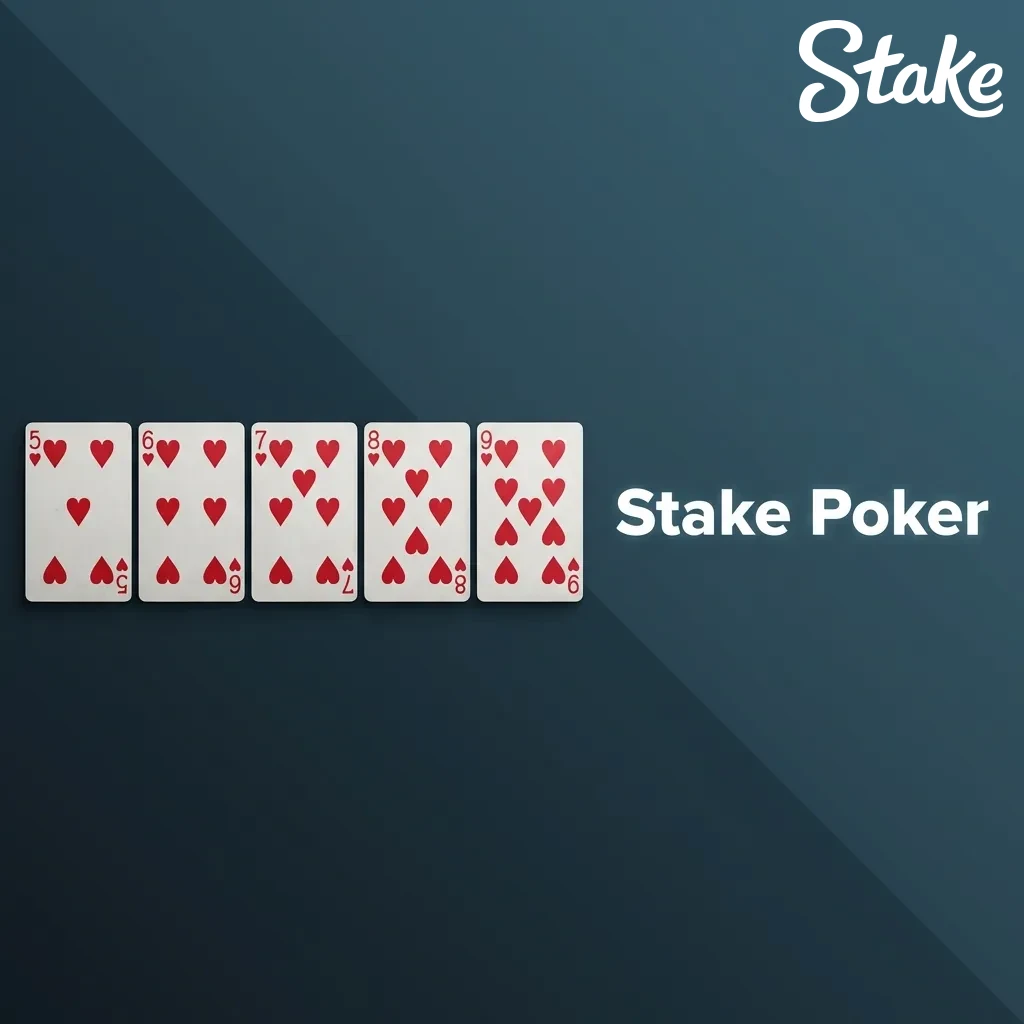
Those models require different comparisons. In video poker, the paytable and decisions matter. In a tournament, inspect the buy-in, fee, blind structure, late-registration rules and payout distribution. A headline prize pool tells you little about the number of entries or cost of re-entry.
If you open a cash table, confirm the blinds and buy-in range. If you open a tournament, distinguish the entry cost from the amount that reaches the prize pool. Do not assume that a casino bonus contributes in the same way across these products.
Poker terminology across casino games and poker rooms
A poker-themed casino game may evaluate your hand against a payout table or a dealer under fixed rules. A multiplayer poker room places you against other participants and can charge fees through pots or tournament entries. Both use familiar card rankings, but their costs, decisions and sources of uncertainty are different.
In a casino variant, read the sequence of compulsory and optional bets. An initial wager can lead to a further decision that requires additional money. Folding may end the hand while losing an earlier wager. A side bet can remain separate from the main result. The total amount exposed in a hand may therefore exceed the first amount displayed.
In a tournament format, distinguish the total entry price from the portion added to the prize pool. Also distinguish entry chips from cash in the account. Tournament chips describe a position within that event; they are not ordinarily a wallet balance that can be withdrawn at any moment. Re-entry and additional-entry rules can change total spending.
Availability depends on the actual product offered to the account. A poker illustration in this guide is a category reference, not proof that every poker format or table is currently open. Find the exact lobby and rules before using a review of one format to evaluate another.
Attach the right conditions to the right balance
A reward can appear beside cash without sharing its withdrawal rules. Open the offer details and identify the balance type, wagering base, contribution rates, stake cap and deadline.
Suppose a fictional offer requires 1,200 units of qualifying turnover. A game that contributes 20% would need 6,000 units of actual wagers to produce that amount of qualifying turnover. This arithmetic explains why game eligibility deserves attention before the size of a bonus.
Do not assume an offer exists for every account. A welcome arrangement, VIP reward and temporary campaign may target different users. If a code fails, inspect the reason before making another deposit. Our bonus guide and code troubleshooting page cover those decisions separately.
The casino balance and the payment route
First identify the currency the game uses. A display setting may show a familiar fiat equivalent while your underlying balance remains in cryptocurrency. Exchange-rate movement can then change the displayed value even when the number of coins stays the same.
Before a permitted deposit, inspect the supported asset, network and receiving instructions. A token name does not identify the network by itself. For a withdrawal, check the destination's own requirements too; an exchange may require a tag or a particular chain.
The complete cost can include operator charges, network costs, provider charges and conversion spreads. Compare the final amount rather than a single “free” label. The payment overview explains how the routes differ, while the transfer guides cover errors and references.
Plan for verification before it becomes urgent
Use consistent account details and payment ownership. When a platform requests documents, follow its secure upload instructions and provide readable, complete files. Editing an address or cropping away identifying information can create another question instead of answering the first one.
Approval of one document does not promise that every future transaction will proceed without review. A changed residence, unusual payment or additional compliance request can require further information. Keep a record of what the operator asks for and what you submit.
If an account already holds money and access changes, contact support about that balance. Do not create a second account or send a small “test” deposit to investigate a restriction. Read the withdrawal guide for the records that make the conversation more useful.
Look at exposure across the whole session
Set the maximum amount and time you are prepared to spend before opening a game. Then count the total across all categories. Moving from slots to Mines does not restart the session's finances.
Fast games deserve a turnover check. At 0.50 units per round, 200 rounds create 100 units of wagers. Whether those rounds take half an hour or a few minutes, the amount remains 100. Autoplay changes the speed and convenience of execution, not the underlying advantage.
Avoid interpreting a loss limit as a target you must use up. You can stop earlier. Likewise, a win does not make the next round safer or turn returned funds into money without value.
Use the account's available limits and exclusion tools if you need them. If play starts interfering with ordinary expenses or becomes difficult to stop, step away and seek independent support. A promotion timer does not deserve priority over that decision.
When a game stalls or a balance looks wrong
Check history before repeating the action. A slow animation can follow an accepted bet, and a connection loss can hide a completed round. Record the game name, round reference and time, then compare the account record with the display.
If the lobby loads but one title fails, note whether another game from the same provider opens. That narrows the issue to a provider, title or device rather than the entire account. Avoid changing several browser settings at once; one measured change gives you clearer evidence.
On mobile, return from the authenticator or payment app and allow the original session to update. If you need to sign in again, use the established account. The mobile guide explains browser installation and recovery without requiring an unofficial download.
A worked review of an unfamiliar game
Imagine you are comparing two fictional titles with the same 1-unit base stake. The first offers only standard rounds. The second also offers a 100-unit feature purchase. Looking at the shared base stake alone would conceal a large difference in possible spending. Your first comparison should therefore include every control that can commit money.
Suppose a completed standard round returns 0.40 units. Record a 0.60-unit net loss. A later round returns 3 units, producing 2 units of net profit on that round. Across those two rounds, total stakes are 2 units and total returns are 3.40, so the combined result is a 1.40-unit gain. Keeping the arithmetic explicit prevents celebratory labels from replacing a real balance calculation.
Now imagine a connection failure after submitting a third round. Do not classify it as a loss or repeat it immediately. Find the round identifier, accepted stake and settlement. The result may already exist on the provider's system even if the animation never completed. If the record is incomplete, preserve it for support.
This review method is intentionally ordinary. It checks cost, rules and records instead of trying to infer future results from a small sample. Ten rounds cannot validate a published RTP or establish that a game is “due” to pay. They can, however, reveal whether you understand the interface and the meaning of the account history.
How to judge the casino for your own purpose
The catalogue's variety makes it easy to compare formats in one place. That is useful if you value both familiar casino games and compact Originals. It also makes it easy to move between products faster than you read their rules.
Evaluate the specific experience you need: a game with a transparent paytable, a live table you can follow comfortably, a payment route you understand or support for an existing account. Keep those tests concrete. A giant game count and a score out of five cannot do that work for you.
What a useful casino comparison should measure
Catalogue size is easy to advertise and difficult to use as a quality measure. Search accuracy, readable rules, clear stake controls and accessible history often matter more when you are evaluating a specific task. A large lobby can still be frustrating if several versions of a title are hard to distinguish.
Mobile usability deserves its own check. The balance, active stake and confirmation controls should remain legible without accidental taps. A provider window that works well on a desktop may have a different arrangement on a phone. Rotating the device can change the layout, but it should not be mistaken for changing the underlying game rules.
Support quality is best assessed through the handling of a concrete issue: whether the operator identifies the relevant round, explains the applicable rule and gives a coherent status. A fast greeting alone does not answer a settlement question. Conversely, a longer investigation may be reasonable when a separate provider must supply records.
Keep these observations distinct from personal results. A losing session does not by itself establish a technical defect; a winning session does not establish that every policy is favourable. A sound evaluation explains the product and its limits in terms another reader can check.
Stake casino questions
Does the catalogue stay the same in every country?
No. Operator rules, provider restrictions and individual product availability can change what an account sees. Consult the current service and local requirements.
Can a slot's maximum multiplier predict its likely return?
No. Read the payout distribution, RTP and feature rules. The maximum describes an upper outcome, not how frequently you will reach it.
Do all Stake games use the Mines verification process?
No. Use the documentation for the exact game and provider. A shared lobby does not make every title technically identical.
Is live casino the same as multiplayer poker?
No. Many live casino tables involve wagers against a house-run game. A multiplayer poker room uses a different competitive and fee structure.
Can you use a bonus on any game?
Only the applicable offer can answer that. Check exclusions and contribution rates before counting a wager toward a requirement.
What should you record for a disputed round?
Save the game name, round or bet reference, timestamp and relevant account-history entry. Send those details through official support without sharing credentials.
About this guide
Garry Anderson · Editorial author
This independent guide combines product explanations, worked examples and references to the operator's documentation. Numerical scenarios illustrate the rules; they do not describe a promised result or a new live-account test.
View the reference materialReferences and product documentation
Reference review: 26 September 2026. Consult the current account interface and applicable rules for changing details. The examples on this page do not represent a personal offer.